
Army delays detonation of unstable explosives in Iowa until Monday after outcry over toxic lead dust
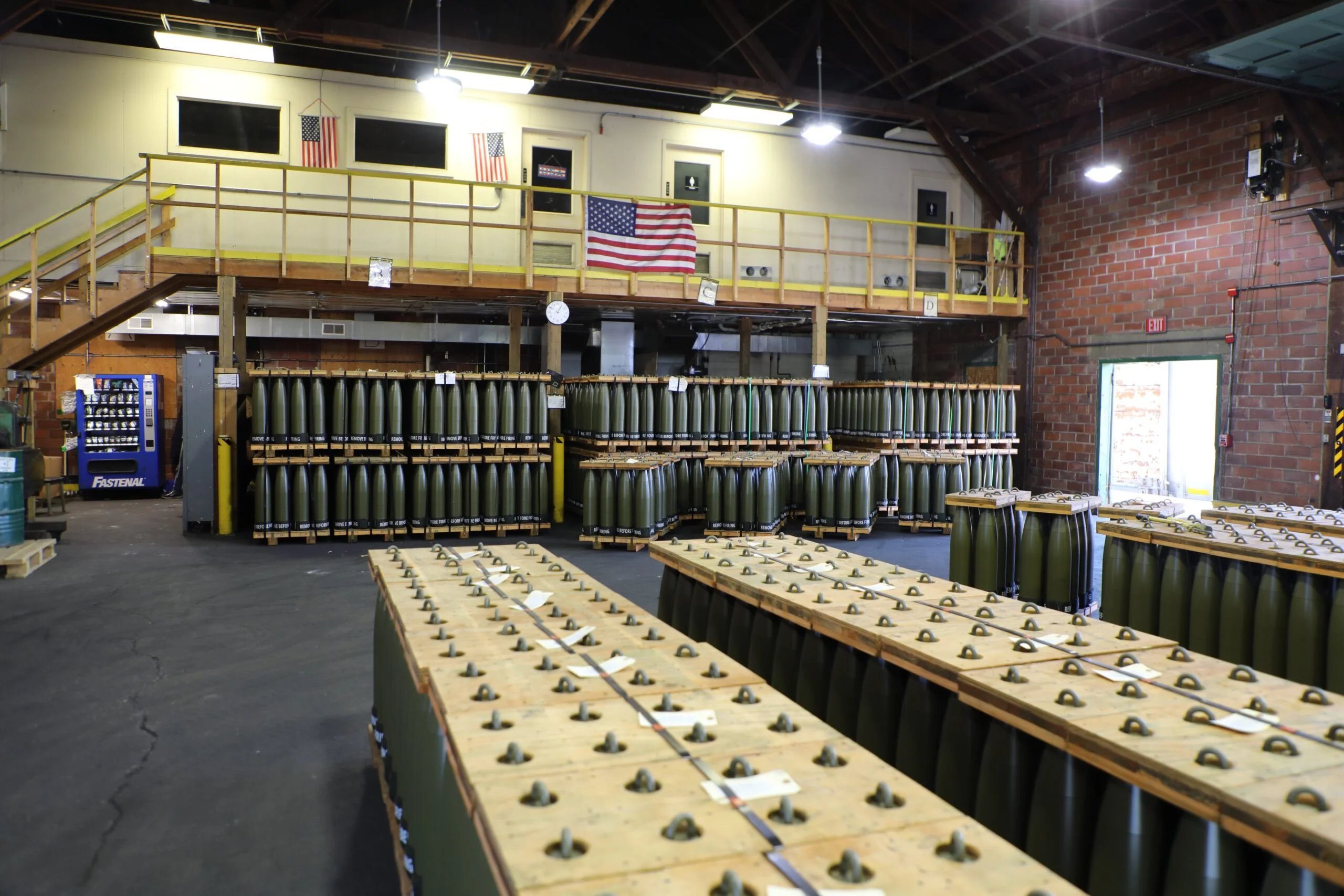 Photo: Defense Daily (file photo)
The U.S. Army has delayed its plan to detonate about five tons of unstable explosives at a munitions plant in southeastern Iowa, pushing the operation from Friday to Monday, November 23, after a day of mounting pressure from Iowa and Illinois officials, a lawsuit from environmental groups, and warnings that a plume of toxic lead dust could drift up to 100 miles.
Acting Secretary of the Army Adam Telle announced the postponement Thursday evening, saying he had directed Army Materiel Command to hold the controlled detonation at the Iowa Army Ammunition Plant in Middletown until Monday — the latest possible moment before a forecasted temperature drop that could further destabilize the material.
"Public safety is the Army's top priority," Telle wrote in a post on X. "This will delay the detonation until the latest possible moment prior to a forecasted temperature drop, which would risk further destabilization of the material." An Army official said Telle will be in Iowa for the detonation, and Sen. Chuck Grassley of Iowa confirmed the delay Thursday evening.
The operation calls for two controlled detonations of 68 barrels of lead azide, a highly sensitive explosive used to set off military ammunition, totaling about five tons. The barrels have been stored at the plant for more than 20 years, submerged in a mixture of ethanol and water inside earth-covered concrete magazines to keep the material stable. During an inspection earlier this year, officials found that some of the water had evaporated, allowing the lead azide to recrystallize and grow increasingly sensitive to friction and shock.
The Army says moving the material now poses an unacceptable risk of an accidental detonation — one that could kill the technicians handling it — and that the risk grows in cold weather. "We're really concerned that it will detonate on its own," Justine Barati, a public affairs specialist at Army Sustainment Command, told the Associated Press. After evaluating other disposal methods, military officials concluded that destroying the explosives where they sit was the safest available option.
But destroying them in place carries its own hazard: the Army acknowledges the blasts will send a plume of dust containing lead particles into the air. Its published forecasts show the plume drifting northward across eastern Iowa and the Mississippi River, potentially into far northwest Illinois, with communities as far as 100 miles away notified. Lead is a toxic heavy metal that does not break down in the environment, and the Centers for Disease Control and Prevention says no safe blood lead level has been identified in children.
The plan drew swift pushback Thursday. Two environmental groups — the Iowa Environmental Council and the Sierra Club Iowa Chapter, represented by Earthjustice — sued in the 8th U.S. Circuit Court of Appeals, challenging the emergency permit the Environmental Protection Agency issued November 13 and asking the court to block the blast until the case is heard. "The EPA itself admits that there is no safe level of lead exposure for humans," said Michael Schmidt, general counsel at the Iowa Environmental Council. "Iowans deserve to know that every available alternative was considered before choosing this method of disposal."
Elected officials from both parties and both states also called for a delay. Iowa Gov.-elect Rob Sand said there had been an "unacceptable lack of communication" and that "if it isn't as safe as possible to do this tomorrow, it shouldn't happen tomorrow." Sen.-elect Josh Turek of Iowa, Sen. Tammy Duckworth of Illinois, Rep. Ashley Hinson of Iowa and Illinois Gov. JB Pritzker were among those urging the Army to wait until the public understood the health risks. A bipartisan group of Illinois lawmakers wrote to Telle and EPA Administrator Lee Zeldin calling for a delay "until there is an opportunity to explore safer alternatives."
Gov. Kim Reynolds's office said Thursday that her administration only learned of the detonation plan on Monday, November 16, after the Army issued its public advisory — five days before the scheduled blast. The Army said it had briefed the town of Middletown, home to nearly 400 people, at a community meeting in October, and that it has been in contact with Iowa officials since the degrading material was discovered in March.
Several school districts in the path of the plume, including Burlington, West Burlington, Mediapolis, New London, Danville and Columbus, had announced plans to close Friday, and residents of Middletown's City Park neighborhood had been asked to leave their homes between 8 a.m. and 2 p.m. Friday. Those plans will now shift to Monday.
The Army says it is taking steps to limit the lead dust released by the blasts, including detonating the barrels inside the earth-covered magazines, surrounding them with sand-filled barriers about two stories high, saturating the soil with water and running misters during the operation. Its modeling predicts airborne lead levels may rise but remain below the threshold at which the EPA would require protective action, and the dust is expected to linger for no more than about an hour. Environmental monitoring is required before, during and after the operation, along with post-detonation sampling and cleanup.
Experts cautioned that the projections are still untested. Patrick O'Shaughnessy, a professor of occupational and environmental health at the University of Iowa, said it is encouraging that the Army and the EPA are working to minimize the dust, but "it's still unknown how much will end up in the air and on surfaces." Andrew Whelton, an environmental engineering professor at Purdue University who has helped communities recover from chemical disasters, said high doses of lead over a short period can cause lead poisoning, while long-term exposure to low doses can harm neurological development, especially in young children.
The Army describes operations like this one near populated communities as highly uncommon. With the delay, officials say they will keep engaging state and local leaders across the region to distribute updated information before Monday's detonation.
Sources: CNN, "Iowans brace for a lead dust cloud as Army plans to detonate 5 tons of bomb-making chemicals" (Nov. 19, 2026, full text verified); Des Moines Register, "Sand says delay lead detonation. Reynolds says she found out Monday." (Nov. 19, 2026, full text verified) and "Environmental groups sue to block Iowa Army Ammunition Plant explosion" (Nov. 19, 2026, full text verified); The Washington Sun, "Army Delays Toxic Lead Detonation to Monday After Pressure From Iowa Leaders" (Nov. 20, 2026, full text verified); NBC Chicago, "'Grave concerns:' Illinois lawmakers request delay to Iowa explosion" (Nov. 19, 2026, updated with Sen. Grassley's confirmation of the delay, full text verified). Event date verified: Acting Army Secretary Adam Telle announced the postponement to Monday, November 23, 2026, on Thursday evening, November 19, 2026.
Sponsored