
Bank of England raises rates to 4% for the first time in three years, warning more may follow
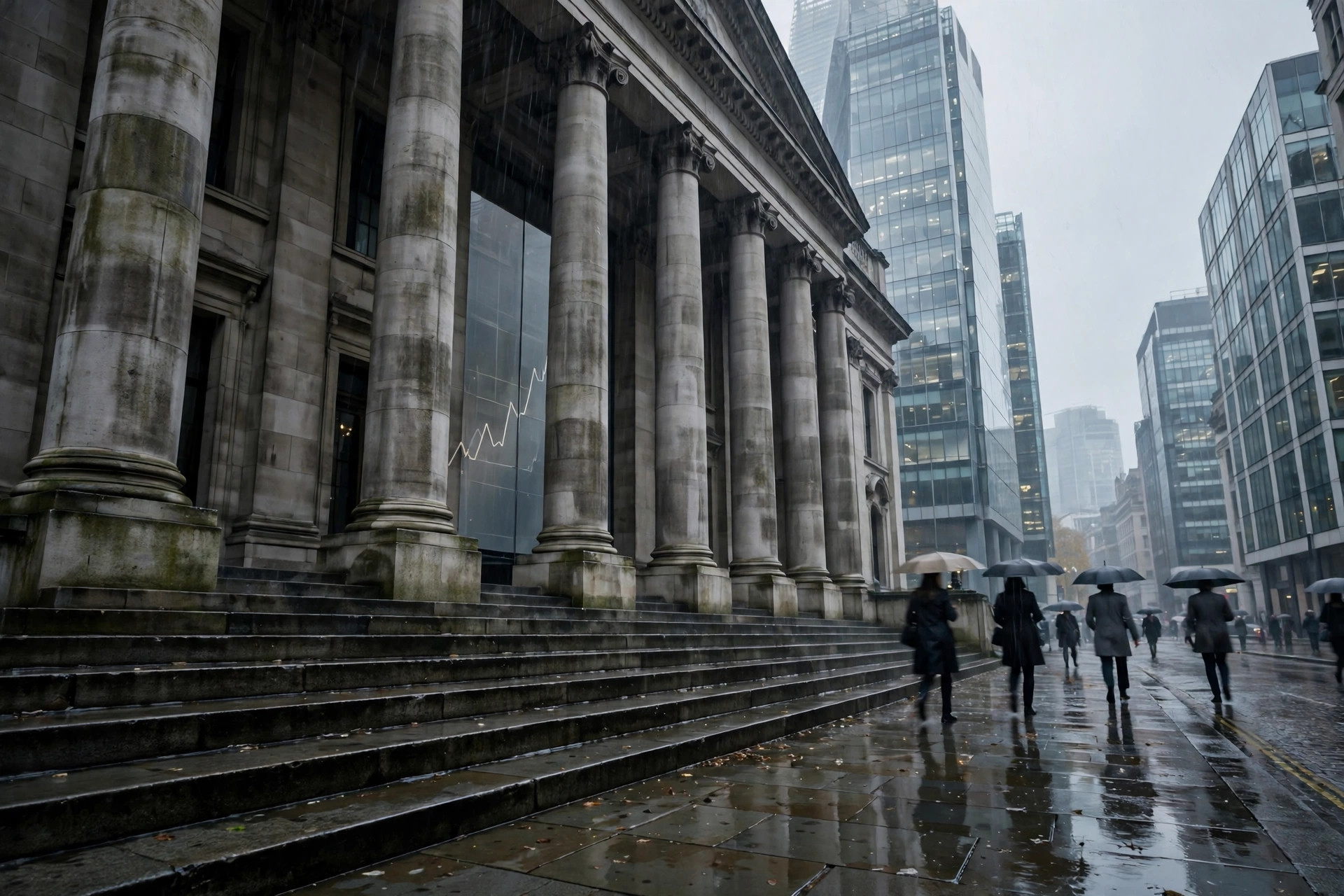 Editorial illustration — Press Pass USA
The Bank of England raised interest rates for the first time in more than three years on Thursday, lifting its benchmark rate to 4% and warning that at least one more increase is likely if the conflict in the Middle East continues.
The central bank's Monetary Policy Committee voted 8-1 to raise Bank Rate by a quarter of a percentage point, from 3.75%. The lone dissent came not from a policymaker who wanted to hold rates steady, but from Catherine Mann, who voted for a bigger half-point increase to 4.25%.
"Today's increase shouldn't be seen as the first in an inevitable long sequence of hikes. But unless the conflict in the Middle East is resolved, neither does it seem likely to be the last increase," Governor Andrew Bailey said.
The reason is energy. The conflict in the Middle East is now in its ninth month, and global energy prices have kept rising from an already elevated level. British inflation reached 3.5% in September, and the Bank now expects it to climb to around 5% by the middle of next year — more than double its 2% target.
While there was little evidence so far of faster inflation outside sectors directly affected by higher energy costs, the Bank said the amount of inflation pressure coming down the road from months of high energy prices required a rate rise now. In its central forecast, inflation is not seen returning to 2% until the third quarter of 2028, six months later than the Bank predicted in July.
The outlook is a blow for new Prime Minister Andy Burnham, who has sought to ease cost-of-living pressures. After inflation and taxes, British households' income from work was set to fall both this year and next, the Bank said.
Several policymakers signaled more tightening could come soon. Deputy Governor Clare Lombardelli said a further rate hike was likely to be needed in the near term, and Chief Economist Huw Pill and external member Megan Greene also spoke of a need for further increases. Two members who had previously been reluctant to raise rates, Swati Dhingra and Alan Taylor, said they would need stronger evidence of second-round effects before backing more tightening.
In a more adverse scenario, in which oil prices peak at around $130 a barrel compared with around $100 currently, the Bank said inflation would hit 6.2% in the third quarter of 2027.
The Bank also revised up its growth forecasts, to 1.6% this year and 1.3% next, citing strong official data, spending on artificial intelligence and a small, temporary boost from finance minister John Healey's annual budget last week. The budget would lower inflation by 0.25 percentage points at its peak but raise it later, when temporary cost-of-living assistance expires, the Bank added.
Borrowers on tracker and standard variable-rate mortgages will feel the change first, while borrowers on fixed-rate deals are shielded until their deals end. Financial markets have priced in three quarter-point rate rises for 2027, more than most economists think is likely. Bailey said that gap reflected markets pricing in tail risks of a sharp further rise in energy prices.
The Bank's next rate decision is due on December 17.
Sources: Reuters, "Bank of England raises rates for first time since 2023, says more may come" (Nov. 5, 2026, full text verified); Bank of England, "Bank rate increased to 4% — November 2026 Monetary Policy Summary and Minutes" (Nov. 5, 2026, verified).
Sponsored