
Black Friday opens a record $1 trillion holiday season — but inflation is doing much of the spending
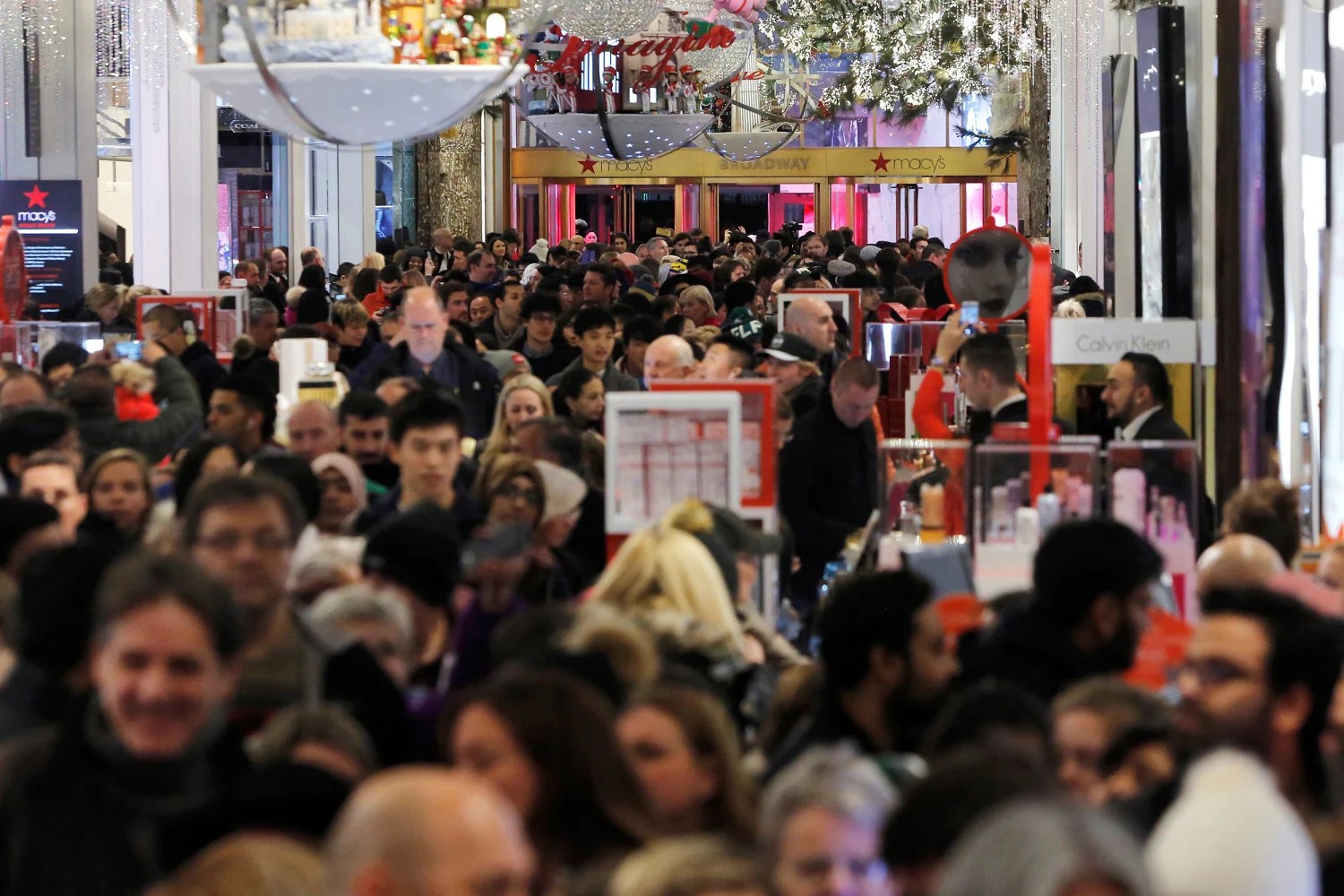 Photo: NBC News (file photo)
American shoppers head into Black Friday with holiday spending forecast to top $1 trillion for the first time — but much of the record is inflation, not more shopping, and most consumers say they are cutting back.
The National Retail Federation expects November and December retail sales to rise 4.2% from last year to $1.013 trillion, the first time its measure has passed the trillion-dollar mark. Holiday sales rose 3.1% to $972 billion last year. The Mastercard Economics Institute and EY Parthenon each forecast sales growth of more than 5%, according to Reuters.
The catch is what is behind the growth. Inflation, the Federal Reserve’s preferred gauge, ran at 3.8% in October — about a percentage point higher than in each of the last two years — and forecasters expect about half of this season’s growth to come from higher prices rather than more goods sold. Visa expects holiday sales to rise 4.5% in nominal terms, with prices for holiday goods up about 3.4%, leaving real growth of roughly 1.1%.
Shoppers are feeling the squeeze. A November survey by the National Retail Federation found that 82% of consumers are taking steps to manage holiday costs, such as buying less expensive gifts. Middle- and lower-income shoppers, who have been trading down for months, are more likely than wealthier ones to spend less, according to a Kearney survey cited by Reuters.
Even so, Americans still plan to show up. A Deloitte survey of 1,200 consumers in October found that 87% plan to shop during the five-day stretch from Thanksgiving through Cyber Monday on November 30 — the highest share in a decade. The retail federation expects about 182.7 million people to shop over the Thanksgiving weekend, down slightly from 186.9 million last year, with Black Friday the most popular day at 69% of holiday shoppers, or about 126 million people.
Retailers have been hearing the caution in their own earnings calls. Target, Dollar Tree and Kohl’s have all pointed to belt-tightening, and Kohl’s chief executive Michael Bender said Tuesday that shoppers are “increasingly choiceful” and “looking to stretch every dollar.”
The forecasts mostly came out before the recent stock market correction that followed the midterm elections, turmoil at chipmaker Nvidia and growing worries about an artificial intelligence bubble. UBS analysts said in a note Tuesday that the decline could dampen the wealth effect that has had affluent shoppers splurging on gadgets and accessories.
Toys show the pressure most clearly. Prices for toys have risen 13.2% since the start of the year, and Barbie maker Mattel cut its annual forecast this month as consumers balked at higher costs. Trading cards — including Pokemon and Magic: The Gathering — have become a growth driver at Best Buy and Target, and one popular squishy toy, NeeDoh, was selling for $24.99 on Amazon in October, nearly triple its price a year earlier, according to e-commerce platform Omnisend.
Artificial intelligence could also change how the season plays out. As shoppers use AI tools to hunt for bargains and retailers get better at changing prices quickly, the deepest discounts may come closer to Christmas, consultant Ryan Orabone of Spaulding Ridge told Reuters. “My advice to shoppers is to be patient,” he said. “Don’t jump on the first deal you see.” U.S. stock markets were closed Thursday for Thanksgiving and reopen for a shortened session on Friday.
Sources: Reuters, “Cautious consumers gear up for Black Friday as inflation woes bite” (Nov. 26, 2026, full text verified); National Retail Federation holiday forecast via Retail Touchpoints (Oct. 15, 2026) and USA News Group / PR Newswire (Nov. 23, 2026); Associated Press holiday forecast coverage as reported by Kurums (Nov. 2026). Event date verified: Black Friday and the holiday spending forecasts, November 26–27, 2026.
Sponsored