
In Cleveland, migrants appear in person while their judge sits 2,000 miles away
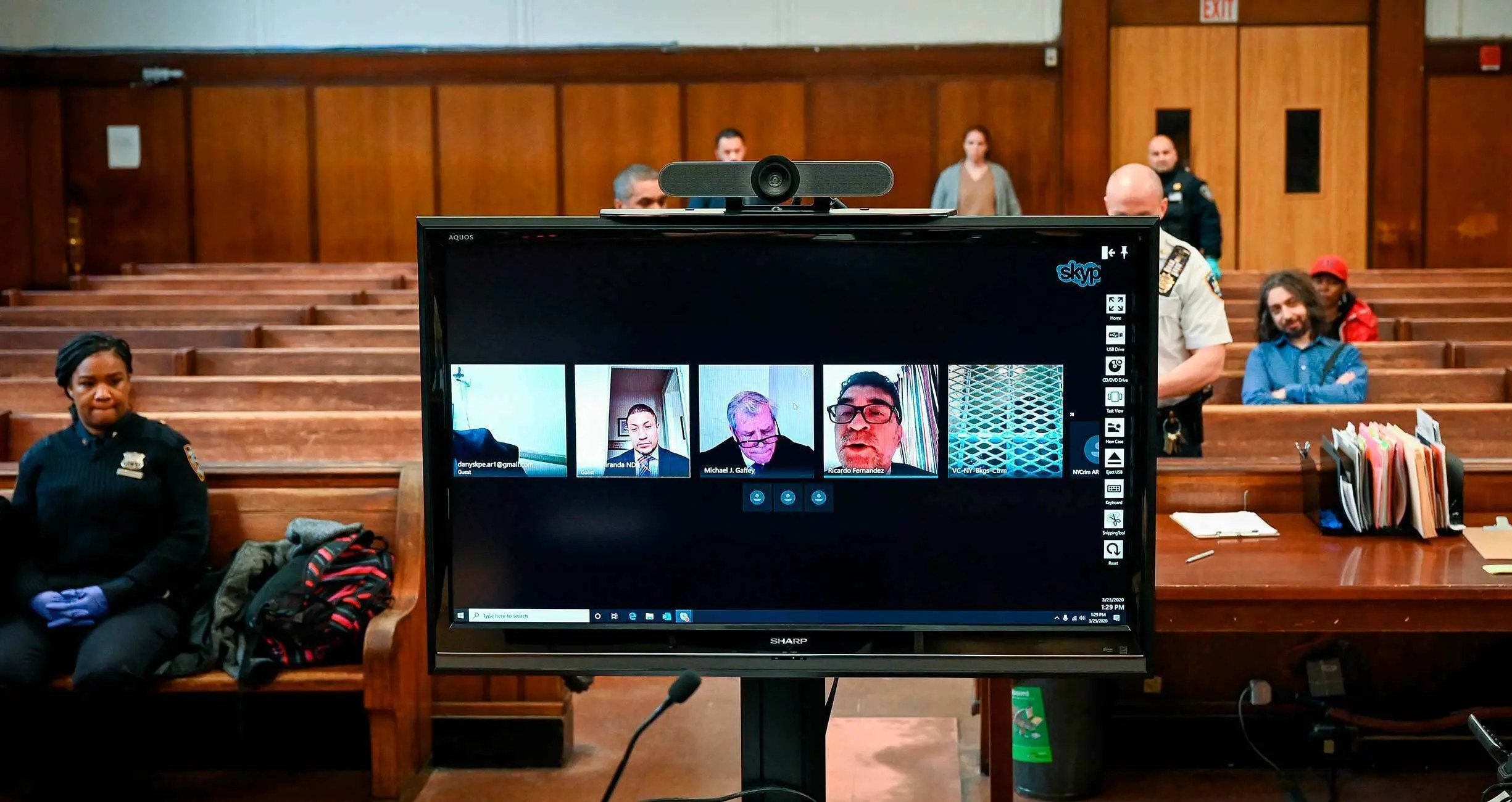 Photo: Vera Institute of Justice
Attorney Lilia Khordj waited with her client in a small room at the Cleveland Immigration Court while the judge who would decide whether the client is deported appeared on a screen from San Diego — more than 2,000 miles away. Khordj and her client had driven about two hours from Columbus to be there in person. The hearing started more than an hour late, and the judge cut it short as the Cleveland court, three hours ahead of him, was closing for the day.
Khordj's client is one of a growing number of migrants required to appear in person at removal proceedings while the judge presides through a screen — in many cases from a court in a different federal circuit, with different case law on detention and asylum. Immigration lawyers and former judges say the practice puts a heavy burden on people caught up in the Trump administration's push to complete cases and carry out deportations faster.
"It's really hard to see these efforts as anything other than another strategy to get these people to a deportation faster," said Margy O'Herron, a former Justice Department attorney who was also a Biden-era White House immigration adviser.
The San Diego judge, Guy Grande, agreed to let Khordj's client make future appearances remotely. "But I don't really understand why that wasn't done before," Khordj said.
Remote hearings became common under the Biden administration, but immigration lawyers and observers say there is less flexibility now. Some judges are ordering people removed for not appearing in person, even as the judge or the Department of Homeland Security attorney joins online.
The pace is part of a record year for the immigration courts. The Justice Department's Executive Office for Immigration Review, which runs the courts, completed nearly 974,000 cases in fiscal 2026 — the highest annual total in the office's history, according to a department announcement on Oct. 29. The office also hired more than 300 permanent immigration judges during the year, another record.
"Any immigration judge can hear any case at any time throughout the country to assist with caseloads, and EOIR is committed to ensuring each alien gets his day in court as efficiently as possible," EOIR spokesperson Kathryn Mattingly said of allowing judges to preside remotely.
The use of remote judges was considered a "game changer" during the pandemic, O'Herron said, and it has real advantages, including rescheduling flexibility. But the practice has expanded during President Donald Trump's second term. The office has sworn in new judges each month since February for openings advertised as "fully remote" from "anywhere in the U.S." or "telework eligible," according to federal job postings.
A Government Accountability Office report from July found that of the nearly 6 million immigration hearings held from fiscal 2022 through 2025, about 63 percent were in person and roughly 2.2 million were remote, most of them over WebEx. The number of remote hearings rose almost 50 percent over that period.
At California's Concord Immigration Court, only four of 21 judges appear in person, said Jeremiah Johnson, executive vice president of the National Association of Immigration Judges. At the Federal Plaza Immigration Court in Manhattan, several judges appear to be based in other locations, including Florida and Maryland, according to an analysis of EOIR judge biographies and LinkedIn profiles.
The result is a patchwork. Some judges require everyone to appear in person. In other cases, attorneys or respondents can be remote. At times, the respondent is asked to appear even if the judge is not there. In some cases, said Princeton University professor Amelia Frank-Vitale, who has studied the immigration court system for decades, judges have ordered an immigrant removed because the person was not physically present.
"The variation always existed, but the stakes of that variation have become much higher," Frank-Vitale said, adding that immigrants also fear being detained at hearings.
Alaska-based immigration attorney Nicolas Olano said his detained clients are sometimes taken to a detention facility in Washington state, but his requests to appear by video have been denied. He fears his clients who are not detained risk being arrested by immigration officials while traveling through airports to get to their hearings.
The problem is compounded by makeshift courtrooms in other federal buildings, advocates said. Immigrants assigned to Justice Department courts are asked to appear in rooms in DHS buildings, with a remote judge on a screen — sometimes a judge sitting in the very courthouse the migrant was originally assigned to.
Ohio is on both sides of the shift. Two Cleveland judges — Monte Horton and Norman Schroth — were recently assigned to take up cases at Massachusetts' Chelmsford Immigration Court, according to EOIR's website. At the same time, Cleveland hearings are being decided by judges based thousands of miles away.
Some judges have also started deciding cases at courts in other federal circuits, causing confusion over which case law applies, lawyers and former judges said. Federal circuits are split on the legality of Trump administration immigration policies, including mandatory detention without bond hearings, said Amiena Khan, a former assistant chief immigration judge in New York who was fired last year.
The general rule is that the case law that applies depends on the circuit where the notice to appear was served, O'Herron said. A judge deciding a case from another circuit is "going to have to get up to speed" on the "case law in that circuit."
The learning curve can be greater for new judges hearing cases remotely, who "don't have the ability to talk to their peers and be mentored into those decisions," said Johnson, the judges' association vice president, who served at the San Francisco court until his firing last November. Without easy access to in-person mentorship, he said, new remote judges are more likely to give in to pressure to close cases quickly and issue removal orders.
"Judges are not given the opportunity to be deliberative anymore," Johnson said. "I don't think that's what the American people expect out of a judicial system."
Sources: Bloomberg Law, “Remote Immigration Judges Advance Trump’s Rapid Deportations” (Nov. 6, 2026); U.S. Government Accountability Office, “Immigration Courts: Stakeholder Perspectives on the Use of Remote Hearings” (GAO-26-108110, July 2026); U.S. Department of Justice, Executive Office for Immigration Review, “EOIR Announces Fiscal Year 2026 Significant Accomplishments” (Oct. 29, 2026).
Sponsored