
Fed's Jefferson says inflation will decide the next rate move as economy holds strong
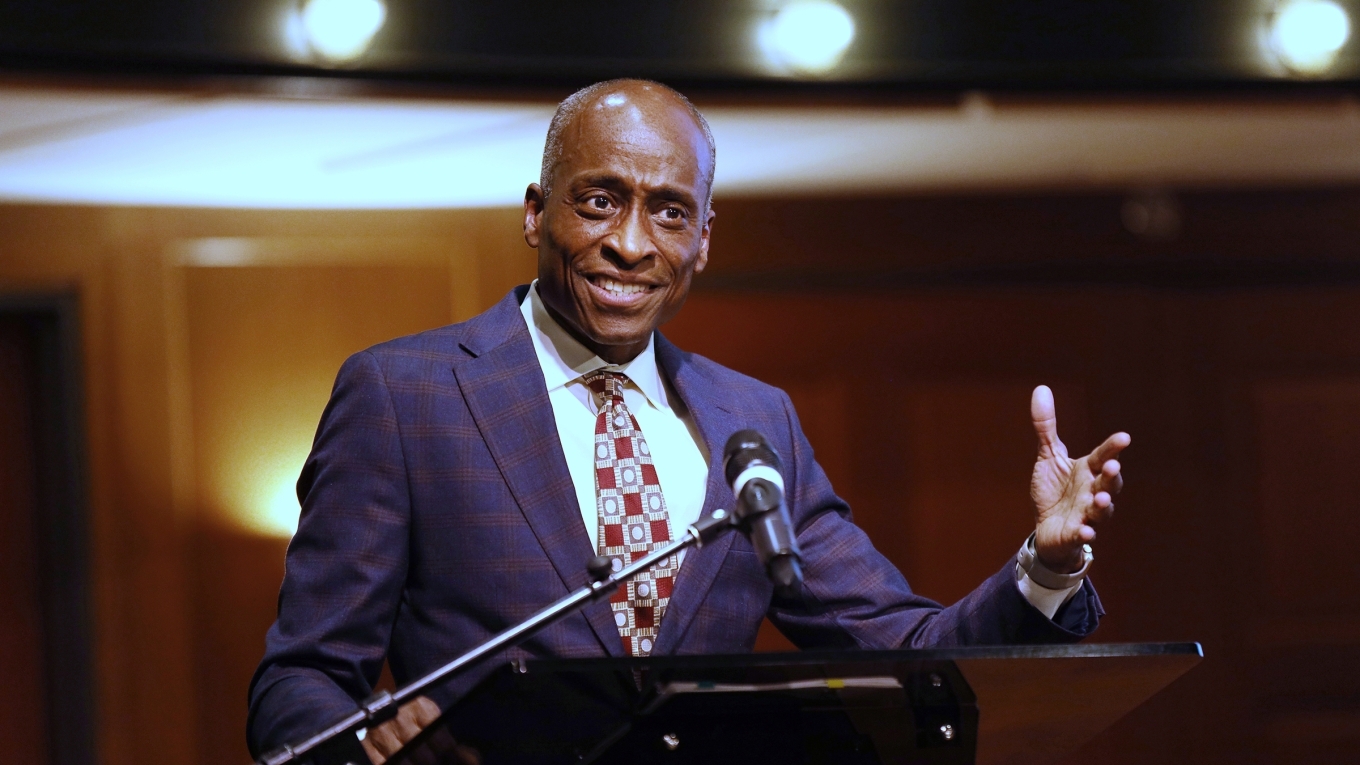 File photo: Davidson College — Federal Reserve Vice Chair Philip Jefferson speaks at Davidson College in 2024
Federal Reserve Vice Chair Philip Jefferson said Friday that with the economy growing and the labor market stabilized, the path of inflation is now the key signal for monetary policy — a remark that suggests he may support further interest-rate hikes to bring prices under control.
Jefferson joined the 10-2 majority of Fed policymakers who voted at their October meeting to wait for more data to accumulate before considering a rate hike. In prepared remarks for delivery at the University of California, San Diego, he said the data since then had held up on both sides of the Fed's mandate — except on prices.
"Data received since that meeting have been consistent with economic activity and labor market conditions remaining broadly solid, while inflation readings show persistent price pressures," Jefferson said.
"Accordingly, I see the trajectory of inflation as providing the more important signal for determining the appropriate stance of monetary policy."
Jefferson gave no steer on whether the Fed will raise rates again when it meets December 8–9. "Going forward, I believe that further policy adjustments should be determined by carefully examining trends in the data, the evolving outlook, and the balance of risks," he said.
Other Fed policymakers in recent weeks have been more explicit, saying elevated and persistent inflation means they would likely support rate hikes that are bigger or come in quicker succession than the single quarter-point increase the Fed delivered in September. Jefferson gave no such guidance.
His remarks land after a week of hot inflation data. Consumer prices came in hotter than expected in October, and wholesale prices rose 6.5% over the past year — the fastest annual pace since November 2022. The two-year Treasury yield jumped 12 basis points to 4.87% on Thursday, already reflecting the hotter consumer price data.
Jefferson was more forthcoming about his views on artificial intelligence, which he forecast would boost productivity substantially but gradually, bolstering economic output and income while potentially causing pain for some workers and businesses.
"One risk to my baseline outlook is that the new technology could displace workers much faster than they can adapt and retrain, which could result in an increase in unemployment," he said. "Monetary policy can affect cyclical conditions, like a temporary downturn in employment and spending, but it cannot address the structural factors that determine long-run rates of employment."
AI adoption could also result in higher overall borrowing costs in the economy, he said, if companies find themselves needing to continually increase their investments to keep up with a permanently higher pace of productivity growth.
Sources: Reuters, "Fed's Jefferson says he is taking his policy cues from inflation" (Nov. 13, 2026, full text verified); Raydn, "Fed's Jefferson says US economy has gained steam and labor market is solid" (Nov. 14, 2026).
Sponsored