
Israel's election count points to deadlock as Netanyahu's bloc leads but falls short of a majority
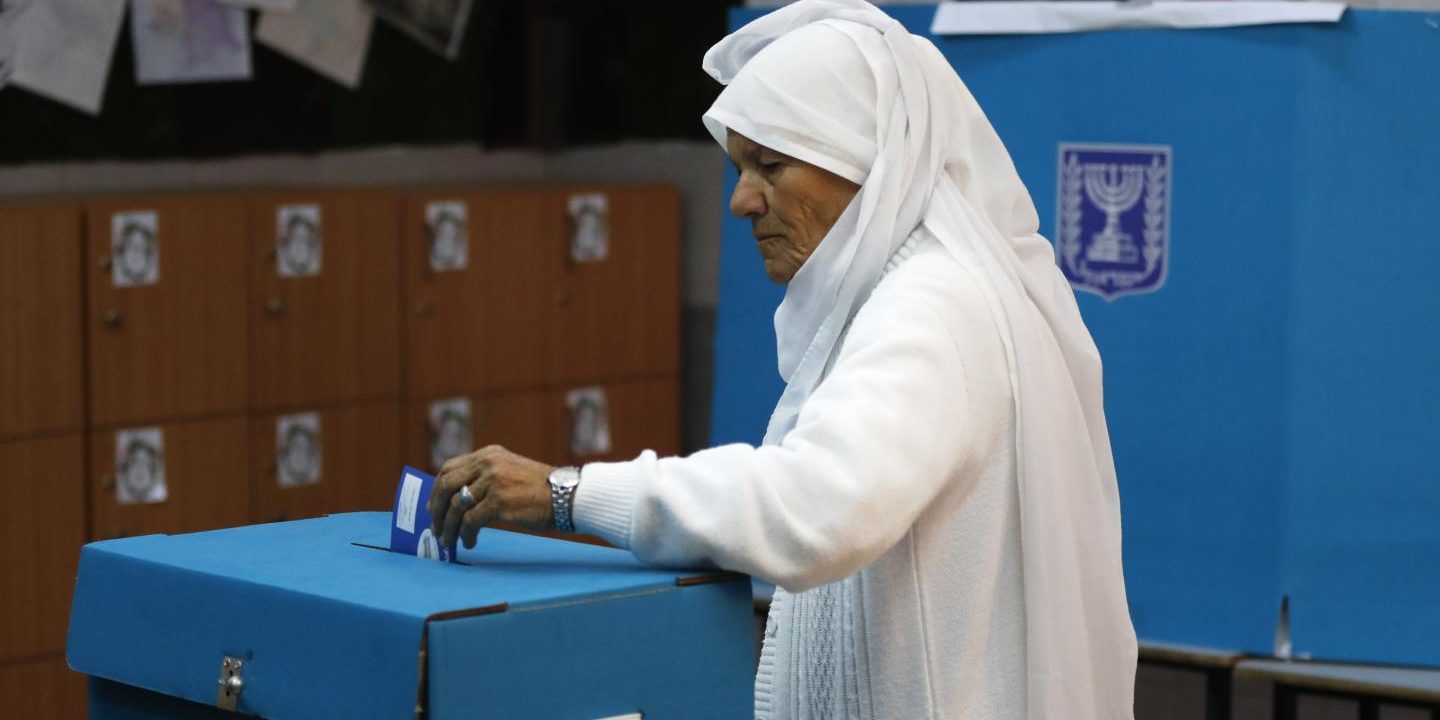 Photo: CAMERA on Campus
Israel woke up Wednesday to a familiar outcome: no clear winner. With more than half the votes counted, Prime Minister Benjamin Netanyahu's bloc led with about 55 seats in the 120-seat Knesset — short of the 61 needed to form a government — while the opposition bloc trailed at roughly 49 to 50 seats, according to projections from Channel 12 and Ynet cited by CNN.
Likud remained the largest single party, projected at about 27 seats, ahead of Gadi Eisenkot's Yashar at about 21. That marked a reversal from Tuesday night's exit polls, which had the two blocs tied at 51–51 (Kan and Channel 13) or Netanyahu's camp narrowly ahead at 52–49 (Channel 12). The outgoing coalition, which held 64 seats, was projected to fall to between 51 and 55.
The balance of power now sits with the Arab parties, projected at 16 to 18 seats combined — nearly double their 2022 result on sharply higher turnout in Arab communities. Neither main bloc can reach 61 without them, yet Eisenkot has all but ruled out forming a government with them, complicating his path to power. Turnout reached 77.7%, the highest by poll-closing time since 1999.
Both leaders staked rival claims overnight: Netanyahu called for a “strong, right-wing national government,” while Eisenkot said voters had rejected Netanyahu and called on him to retire from politics. Neither claimed victory. The count is still provisional — double-envelope ballots, including votes from soldiers and Israelis abroad, are counted Thursday, and official results are due November 4. Until a government is formed, Netanyahu remains in office as caretaker prime minister.
Sources: Reuters (Oct 28, 2026); CNN (Oct 27–28, 2026); Le Monde (Oct 28, 2026).
Sponsored