
Ohio salt mine under Lake Erie shut for good after flooding, putting winter road salt at risk
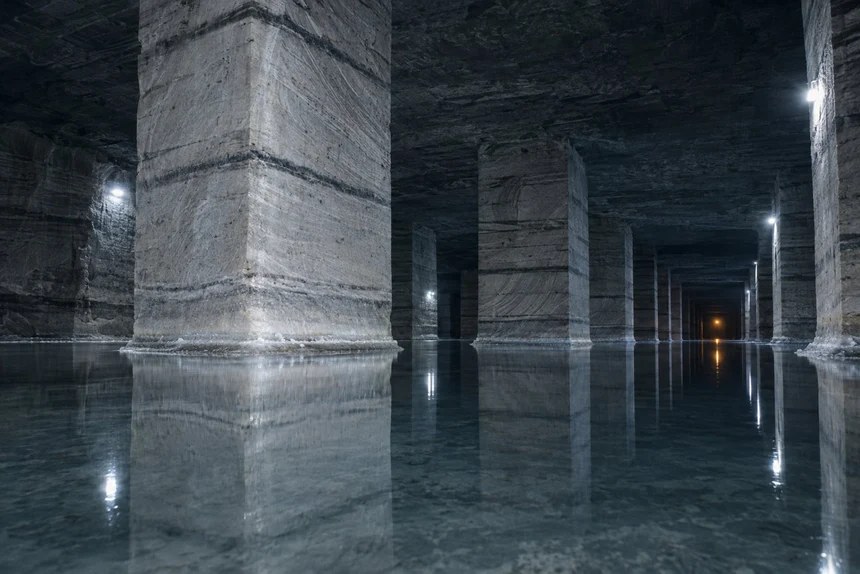 Photo: Alliance Chemical
Morton Salt has permanently closed its Fairport Harbor mine beneath Lake Erie, ending 77 jobs and cutting off about 1.3 million tons of road salt a year — weeks after water began gushing through a crack in the mine's ceiling, the company still cannot say where the water came from.
When water began pouring into the mine last month, the company had only one option: shut the site down for good, The Guardian reported Saturday. The mine, roughly 2,000 feet beneath Lake Erie, was one of 12 rock salt mines Morton Salt operates around the world. The 77 workers were laid off in late October, after the water inflow was discovered on October 22 and all miners were evacuated safely, with no injuries.
The closure lands hard on the counties that relied on the mine to keep winter roads passable across northeast Ohio. Trumbull County, about 30 miles from the mine, got its road salt entirely from Fairport Harbor. County engineer David DeChristofaro said the county normally takes about 30,000 tons a year from the mine but now holds a stockpile of only around 14,000 tons.
"We are waiting for the Ohio department of transportation [to see about acquiring additional road salt supplies]. If necessary, we will mix salt with aggregate, one to one, as was typically done 15 years ago, to stretch our supply of salt," DeChristofaro told The Guardian. He said the extra step would raise costs because the material has to be swept up after winter. The Ohio Department of Transportation has a contract with Morton Salt to supply 549,811 tons to 35 counties this winter and spring for $61.10 a ton, according to Lakeshore Views & News. Lake County engineer Alan Exley said his office holds a contract for 24,000 tons this winter and that Morton still has an above-ground salt supply at Fairport Harbor it can distribute.
The biggest unanswered question is what caused the leak. Morton Salt officials said weeks after the shutdown that they still have not identified the source of the water intrusion. The company did not respond to questions about how often the mine underwent a full perimeter inspection for water intrusion before its closure, whether it knows the source, or whether it is planning new safety measures at its other mines.
The mine's location — dug beneath one of North America's most important freshwater systems — has sharpened the scrutiny. Five salt mines sit partly or entirely beneath Great Lakes waterways: in Fairport Harbor, Detroit and Cleveland, and two more across the border in Ontario. A Cleveland Plain Dealer editorial this month pressed the question of whether underground mining could threaten drinking water for the millions of people in the United States and Canada who depend on Lake Erie.
Xiong "Bill" Yu, a professor of engineering at Case Western Reserve University in Cleveland, said mining changes the stresses underground and can create conditions for water to move if there is a pathway from a water source to the mine. "Blasting can fracture rock near an excavation, and removing rock changes the stresses carried by the roof, pillars and surrounding layers. For water to enter, there must also be a connected pathway from a water source to the mine," Yu told The Guardian. "A nearby aquifer could supply that water through a fault, connected fractures, or a compromised shaft or seal. More than 1,000ft of rock is meaningful separation, but the engineering question is whether the layers provide a continuous barrier and whether anything crosses it." Yu said he would support a targeted review of water-intrusion hazards at operations beneath the Great Lakes, including the condition of shafts, seals, roofs and pillars.
History has sharpened the anxiety. In 2017, the much larger Cargill-run Whiskey Island salt mine, about 30 miles west of Fairport Harbor, had a water intrusion event that released dangerous levels of hydrogen sulfide gas. More than 200 workers are employed there on 12-hour shifts. Cargill also did not respond to questions about added precautions at its lakefront mine. Earlier disasters showed how quickly underground water can overwhelm a mine: a major salt mine in western New York collapsed in 1994 after aquifer water flooded it, and in 1980, Lake Peigneur in Louisiana drained after an oil rig broke through the roof of an underwater salt mine. No miners were injured in either event.
The Mine Safety and Health Administration, a federal agency, oversees health and safety in U.S. mines. The Fairport Harbor shutdown is arriving during a period of shifting federal oversight, as the current administration has moved to ease some mine rules, including the removal of diesel particulate matter exposure levels in mines. Miners employed at the Fairport Harbor facility who were contacted declined to be interviewed, citing restrictions in a non-disclosure agreement.
Sources: The Guardian, "Underwater salt mine closure in Ohio raises safety and supply concerns for winter" (Nov. 14, 2026); Lakeshore Views & News, "Lake County may be facing a winter of less salt" (Nov. 10, 2026); Cleveland.com reporting on the water breach; Morton Salt company statement (Oct. 26, 2026); WKYC and News 5 Cleveland reporting on the layoffs (Oct. 28, 2026).
Sponsored