
Eisenkot rejects Netanyahu's unity offer after Sunday talks collapse
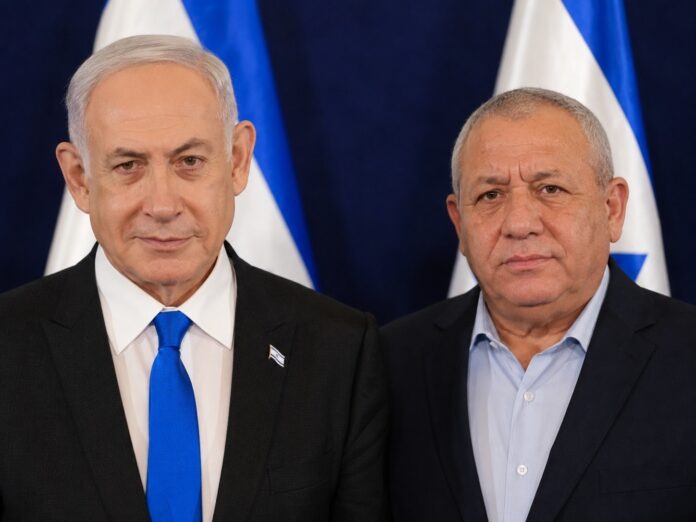 Photo: Matzav (file photo)
Benjamin Netanyahu offered his chief rival, Gadi Eisenkot, the first turn as prime minister in a rotating unity government — and Eisenkot said no. The two leaders met on Sunday to discuss the proposal, but the talks broke down within hours over what a source briefed on the meeting called "significant gaps on substantive issues."
Netanyahu made the offer publicly on Saturday evening, in a statement on X. He said "unity is the need of the hour" and that, although his Likud party is the largest in parliament and he should normally lead a unity government or go first in any rotation, his "responsibility as a leader requires me to set everything aside" and agree that Eisenkot would serve first as prime minister while he served as alternate prime minister at the start of the term. He did not say how long Eisenkot's initial turn would last, and he expected Likud and Eisenkot's centrist Yashar party to "immediately begin genuine, sincere, and accelerated negotiations" in which both sides would make compromises.
The Sunday meeting began with a security briefing and then moved to the possibility of a unity government, with both sides "attempting to bridge the large existing gaps," according to a joint statement by the two parties afterward. But the gaps proved too large. "It was decided not to continue negotiations between the negotiating teams due to significant gaps on substantive issues," the source told CNN, adding that no follow-up meeting has been scheduled.
Eisenkot told Netanyahu he remains committed to the so-called "change bloc" working to oust Israel's longest-serving leader, the source said — and that Likud could join a government later if it accepts its basic principles, including a state commission of inquiry into the failures around the Hamas-led attacks of October 7, 2023.
The offer came as Eisenkot, tasked by President Isaac Herzog with forming the next government after October's inconclusive election, was closing in on a coalition that could end Netanyahu's rule. Neither bloc won the 61 seats needed for a majority in the 120-seat Knesset: Netanyahu's bloc of nationalist and religious parties took 53 seats, while Eisenkot's four-party opposition alliance won 48. Eisenkot's mandate to form a government expires on December 6, and he can ask for a two-week extension, but he has vowed to bring a new government to a parliamentary vote as early as next week. If no deal is reached by December 6 and an extension fails, Netanyahu could get the next chance to form a government — and new elections might be called if he also fails.
Eisenkot has already signed a coalition agreement with the right-wing Yisrael Beiteinu party and the left-wing Democrats, and he is holding talks with United Torah Judaism, an ultra-Orthodox party that for years supported Netanyahu. His most straightforward path to replace Netanyahu still relies on some form of support from the Arab parties, whose 19 seats in the Knesset turned them into likely but politically fraught allies for the opposition bloc.
Reactions to Netanyahu's offer split the opposition. Former Prime Minister Yair Lapid called it a "transparent con by a serial fraudster who has cheated every partner and broken every agreement," and proposed swearing in an Eisenkot-led government without Netanyahu first. Former Prime Minister Naftali Bennett, by contrast, welcomed the offer as the "right decision" and said a unity government should be built around parties representing Israelis who perform military or national service. Yousef Jabareen, leader of the Arab-led Joint List, urged rejecting the offer: "It's time to fulfill the shared will of the entire public — Jews and Arabs alike — and oust Netanyahu this week."
Much of the skepticism around Netanyahu's offer comes from the last rotation deal he entered. After the 2020 elections, Netanyahu formed a unity government with rival Benny Gantz, with Netanyahu serving first — but instead of transferring the premiership as agreed, he refused to pass a state budget, automatically triggering new elections and scuttling the government before Gantz could have a turn as prime minister.
Sources: CNN, "Israeli leadership rival Eisenkot rebuffs Netanyahu's power-sharing plan" (Nov. 29, 2026, full text verified); Associated Press, "Israel's Netanyahu and Eisenkot met to discuss forming 'national unity government'" (Nov. 29, 2026, full text verified). Event date verified: offer Saturday, November 28, 2026; talks and rebuff Sunday, November 29, 2026.
Sponsored