
Ohio midterm turnout hits highest level since 1990 as 4.66 million cast ballots
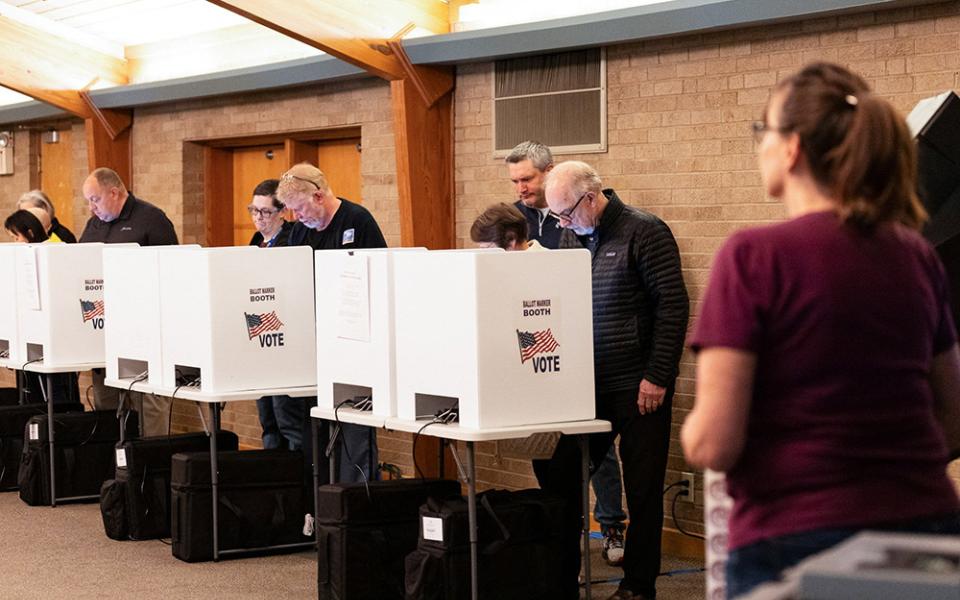 Photo: National Catholic Reporter (file photo)
At least 58.1% of registered voters cast ballots in Ohio's 2026 midterm elections — the highest midterm turnout in the state since 1990, according to data from the Ohio Secretary of State's office.
A record 4,658,250 ballots were counted in the Nov. 3 election, the secretary of state's office said, and that number will likely rise as outstanding provisional and overseas ballots are counted. "A record 4,658,250 ballots (unofficial) were counted in Ohio's midterm election, a testament to both the security and convenience of our process," Secretary of State Frank LaRose wrote on social media.
Turnout in 2026 surpassed the 55.7% recorded in 2018, when Gov. Mike DeWine defeated Democrat Richard Cordray in a tight governor's race, and the roughly 52% who voted in the 2022 midterms. The all-time midterm record is 61.2%, set in 1990, when Republican George Voinovich defeated Democrat Anthony J. Celebrezze Jr. in an open governor's race.
There were signs before Election Day that turnout would be high. Before the polls opened, Ohio set a new early voting record for a midterm election, with more than 1.7 million Ohioans casting ballots through Nov. 1.
About 4.66 million Ohioans voted in an election in which Democrats dominated the competitive races for governor and U.S. Senate: Amy Acton defeated President Donald Trump-backed Vivek Ramaswamy, and former Sen. Sherrod Brown unseated Republican Sen. Jon Husted in a special election to fill Vice President JD Vance's seat.
Competitive races, a statewide issue and "tons of political spending" drove the higher turnout, said Aaron Ockerman, executive director of the Ohio Association of Election Officials. "We are inspired by the high turnout this election cycle," said Jen Miller, executive director of the League of Women Voters of Ohio. "We hope that Ohioans will remain committed to civic engagement by letting elected officials know what they want out of their government and continuing to vote in high numbers."
The high turnout will also raise the bar for groups collecting signatures to put issues on the statewide ballot. The number of valid signatures needed is tied to a percentage of the votes cast in the most recent governor's race: to put a proposed constitutional amendment on the ballot between 2027 and 2030, a group must collect valid signatures equal to 10% of the votes cast in the 2026 gubernatorial election. Referendums of existing laws must meet a 6% threshold, and citizen-initiated statutes must collect 3%. Among the proposals now in circulation are a data center ban and a measure to abolish property taxes.
Election officials also say Ohio will need new voting machines as existing equipment nears the end of its useful life. Ohio lawmakers last approved $114 million for new voting machines in 2018, and they have a shelf life of about 10 years, Ockerman said. "It is my hope that the next General Assembly will invest in elections," Miller said. Officials also want fewer changes to Ohio's voting laws, including recent overhauls to photo ID rules and when absentee ballots can be delivered. "There's no urgency to make massive upheaval changes to the system," Ockerman said.
Sources: The Columbus Dispatch, "Ohio voter turnout surpasses recent midterms, highest since 1990" (Nov. 9, 2026, full text verified); WNIR 100 FM, "Voter turnout" (Nov. 6, 2026); Signal Ohio, "Ohio Democrats won big. What comes next?" (Nov. 5, 2026); Ohio Secretary of State's office data. Event date verified: Monday, November 9, 2026 (election held Tuesday, November 3, 2026; turnout figures reported Nov. 9).
Sponsored