
New blood test can spot ovarian cancer at its earliest precancerous stage, study finds
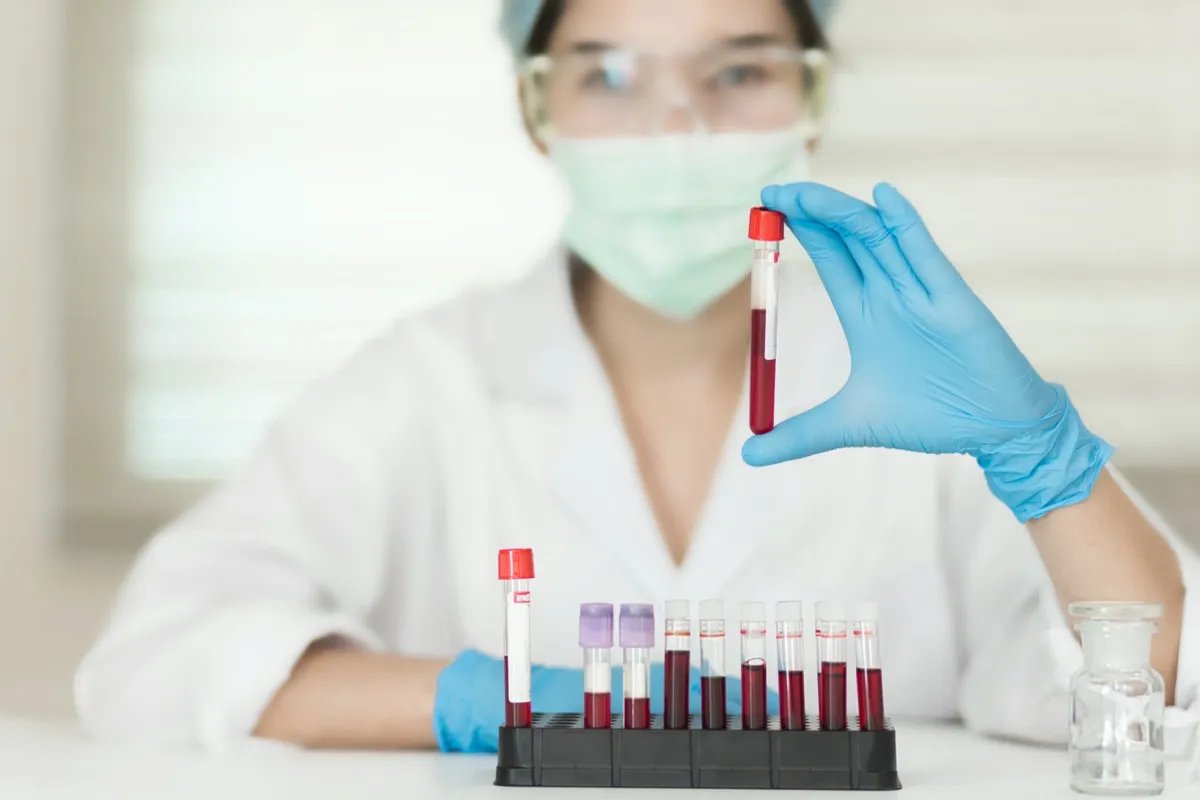 File photo: A laboratory technician holds a blood sample (Eat This, Not That)
Researchers in California have found a molecular warning signal in the blood that can reveal ovarian cancer at its earliest, precancerous stage — years before a tumor forms or conventional tests can detect anything. The discovery, published Tuesday in the journal Nature Medicine, is the first of its kind for the most common and most lethal form of the disease.
The study, led by researchers at the Hoag Family Cancer Institute in Newport Beach, focused on high-grade serous ovarian cancer, which often begins not in the ovary itself but in the fallopian tube, as a cluster of abnormal cells known as serous tubal intraepithelial carcinoma, or STIC. The cells are microscopic, non-invasive and invisible to imaging and to the blood tests doctors use today.
The team identified an RNA molecule called Tu-Stroma, whose levels in the blood rise in women with STIC and with early-stage high-grade serous ovarian cancer. Tu-Stroma is tied to one of cancer's most basic tricks: weakening neighboring healthy cells to make room for cancer cells to grow. By tracking that early competition between cancer and healthy tissue, the researchers found a signal that could flag the disease long before a tumor appears.
In a validation group, the test detected STIC in 92.3% of the women who had it and correctly identified 98.2% of healthy women. When the researchers modeled how it might perform in a high-risk population, about 72% of positive results would be accurate — roughly three in ten would be false alarms needing follow-up — while a negative result would be correct nearly 100% of the time.
The finding matters because there is currently no reliable screening test for ovarian cancer. Ultrasound and the blood tests used in current practice cannot reliably catch the disease early, and most cases are found only after the cancer has spread, when it is far harder to treat.
The work was an eight-year, international effort, led by Dr. Rajan Gogna, director of translational research at the Hoag Family Cancer Institute, and Dr. Esha Madan, principal investigator of the Cell Competition in Tumor Microenvironment Laboratory at Hoag, using clinical samples from multiple countries.
There are limits the researchers are clear about. The study analyzed blood samples collected earlier from women whose diagnoses were already known, so it does not yet prove the test can predict cancer as it develops in real time. Tu-Stroma is a research discovery, not a clinical test: no patient can ask a doctor for it today, and no timeline for one has been announced. Hoag researchers are planning prospective studies following women over time, including women with and without an elevated genetic risk of ovarian cancer.
Sources: MedicalXpress, "Blood RNA signal may reveal ovarian cancer precursors before invasive disease develops" (Nov. 10, 2026); Hoag / GlobeNewswire, "Researchers Discover Blood-Based Warning Signal for Ovarian Cancer at its Earliest, Precancerous Stage" (Nov. 10, 2026); Nature Medicine (2026), DOI: 10.1038/s41591-026-04732-9.
Sponsored