
Pope Francis's private diary reveals visions of the devil and a two-year spiritual crisis
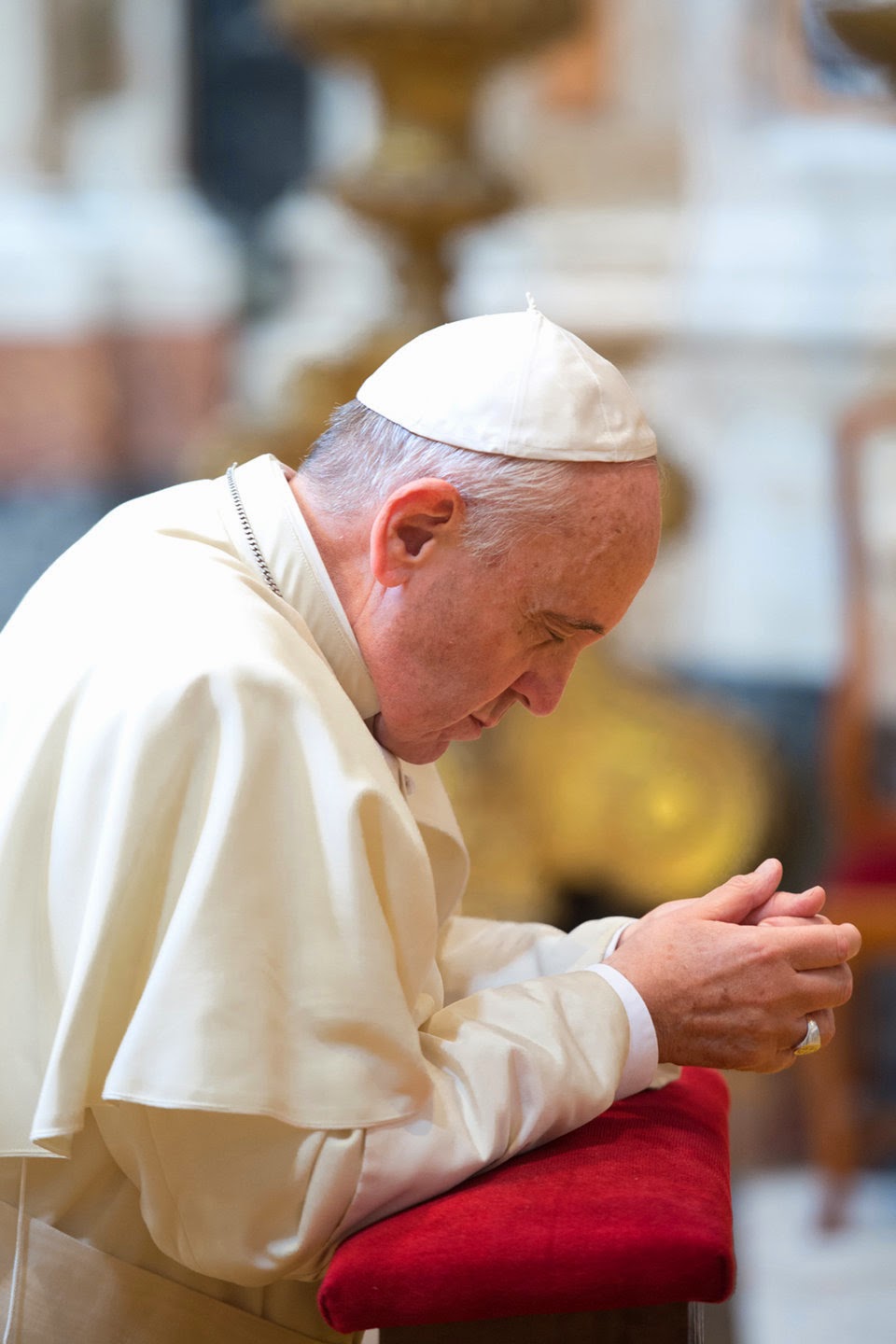 Photo: file photo
Pope Francis saw the devil three times, glimpsed what he called the gates of hell, and suffered a profound spiritual crisis over the temptations of power during his papacy, according to his private diary, published for the first time on Tuesday.
“The Private Diary of Pope Francis,” a 160-page book released globally in several languages by the Vatican Publishing House, draws on diary entries the Argentine pope kept from 1992 until August 2024, eight months before his death. The book was curated by one of his closest aides, Cardinal Víctor Manuel Fernández, the Argentine theologian who heads the Vatican's doctrine office. Fernández is listed as the author, with his commentary framing Francis's entries.
Francis, the first Latin American pope, led the Catholic Church for 12 years until his death on April 21, 2025, at the age of 88. The diary, kept in a leather-bound calendar used as a notebook, begins in 1992, when Jorge Mario Bergoglio was auxiliary bishop of Buenos Aires, and runs through his years as cardinal archbishop of the Argentine capital and finally as pope. The last entry is dated August 18, 2024.
The most striking passages describe what Francis believed were encounters with the devil — three of them, recorded in an entry dated January 24, 2021. Two occurred while he was in Buenos Aires. In the first, he wrote that he saw the devil from a car window: “I can't forget his menacing and, at the same time, seductive eyes.” In the second, at a Carmelite chapel, he wrote: “He looked at me with flaming eyes. I won't forget that look, more intense than the previous one. They were like flashes of fire.”
The third encounter came after his disastrous trip to Chile in January 2018, during which he publicly defended a bishop accused of covering up sexual abuse. “A few days after returning to Rome, I was in a meeting. I saw him and heard his voice, triumphant possessing everything. ‘Now I've gotten everything I wanted,’” Francis quoted the devil as saying. “Just as I can't forget his eyes from the previous two, in this case, I can't forget the powerful raspiness of his voice.”
After journalists, including from The Associated Press, challenged him on the flight home from Chile, Francis commissioned an investigation and realized the victims were right and he had been misled by the Chilean hierarchy. “Devastated because of the situation in Chile and the dialogue with the journalists on the airplane,” he wrote. “I became aware of how serious the problem was. … It was hard for me to admit what happened in Chile; I didn't think it was so serious.” On June 7, 2018, he wrote that he “saw the entrance to hell. Pagan seduction in full force” in the Chile scandal. In July and August of that year, as he dealt with the fallout, he wrote: “What shame and evil this has brought on the church!” and “Once more the gates of hell. … May holiness and conversion abound in the midst of so many scandals.”
The book dates the onset of Francis's spiritual crisis to January 24, 2021. The day before, he had canceled several public appearances because of what the Vatican said was a resurgence of his sciatica. Fernández reveals, however, that Francis was suffering from “insupportable” pain from an intestinal problem that, in July 2021, would put him in the hospital for 10 days for surgery to remove 33 centimeters (13 inches) of his colon.
The crisis unfolded as the world was still gripped by the COVID-19 pandemic and the Vatican was in upheaval over a massive financial investigation Francis had authorized, after he fired a onetime close collaborator, Cardinal Angelo Becciu, in September 2020, convinced Becciu had embezzled money from the Holy See.
In the end, Fernández writes, the crisis was primarily related to Francis's exercise of power — the temptation to omnipotence and the belief that he was above the world. It was a vice Francis had admitted to publicly in 2013, in his first interview as pope, when he acknowledged a tendency to wield power in an “authoritarian” way. For Francis, the temptation to omnipotence was the devil tempting him to “reductive curiosity,” or believing he alone could solve everyone's problems, and essentially thinking of himself as God. By December 30, 2022, Francis had overcome the crisis, by entrusting himself entirely to God's mercy.
Fernández writes that by then, Francis realized that what began on January 24, 2021, “was a powerful invitation from the Lord to become aware of an accumulation of interior darkness that he had to overcome so he could be free.” The final two major teaching documents of Francis's life — a 2023 text on confidence in God's merciful love and a 2024 encyclical on Christ's human and divine love — were deeply spiritual texts borne out of the crisis, Fernández notes.
The diary includes hardly any information about church matters, Fernández writes, and is truly a spiritual repository. He said he omitted entries affecting third parties, though he does include some of Francis's personal musings — including about then-Cardinal Robert Prevost, now Pope Leo XIV: “A great pastor, a generous missionary and an irreproachable man.”
Fernández said Francis had shown him the diary during one of their meetings before his death and told him “From this, you will all see,” essentially entrusting the writings to him. He said he mentioned the writings to Leo a few weeks after his election. “I added that I wished to study these materials — to make them known and interpret the exact meaning of their contents,” Fernández wrote. “The Holy Father showed intense interest.” Pope Leo approved the publication.
While the book reveals some of Francis's innermost thoughts, Fernández says Francis wrote his most confidential thoughts in an indecipherable code, which is not reproduced. The English-language version is being released in the United States and Canada by Image Books, an imprint of Penguin Random House Christian Publishing Group.
The posthumous publication of popes' innermost spiritual musings is not unusual. Pope John XXIII's autobiography, “Journal of a Soul,” was published by his secretary in 1960. St. John Paul II had wanted his personal notes burned after his death, but his secretary defied his wishes and had the writings published in 2014.
Sources: The Associated Press, via Louisiana First News, “Pope Francis' private diary details encounters with the devil, spiritual torments” (Nov. 24, 2026, full text verified); CNN, “Pope Francis battled visions of the devil during a two-year spiritual crisis, diaries reveal” (Nov. 24, 2026, full text verified); Reuters, via WDSM, “Pope Francis had visions of the Devil and Hell, diaries reveal” (Nov. 24, 2026, full text verified); The Times, “Pope Francis ‘saw the flaming-eyed Devil’ three times” (Nov. 24, 2026, full text verified). Event date verified: book published Tuesday, November 24, 2026.
Sponsored