
ULA Vulcan rocket fails minutes after liftoff, destroying 40 Amazon Leo satellites
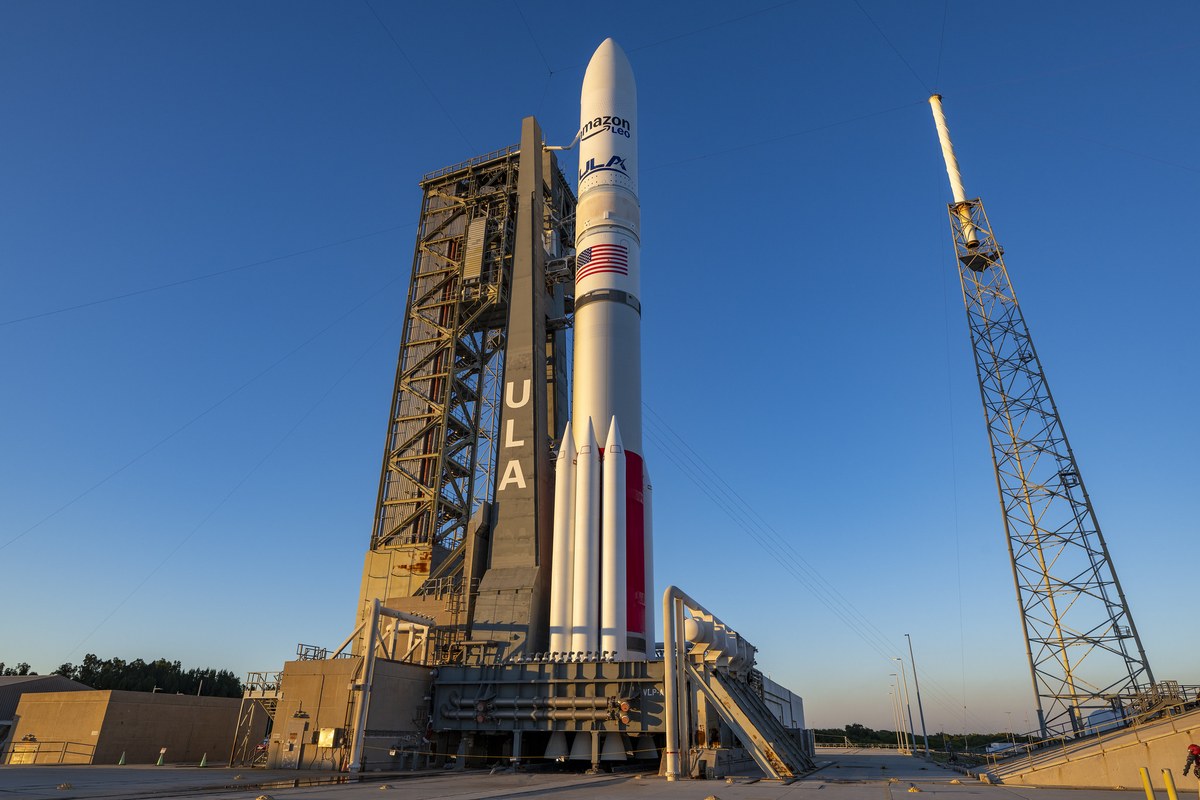 Photo: United Launch Alliance
A United Launch Alliance Vulcan rocket failed about 10 minutes after liftoff from Cape Canaveral on Sunday, destroying its payload of 40 Amazon Leo internet satellites in the launch company's first mission failure since it was formed in 2006.
The 215-foot Vulcan lifted off from Space Launch Complex 41 at Cape Canaveral Space Force Station at 12:40 p.m. ET, after two days of delays and a countdown hold with 20 seconds left on the clock to resolve a technical issue. It was not immediately known whether that issue played any role in the failure. About 50 minutes after liftoff, ULA confirmed the loss. "Based on data received by our Launch Director, we confirm that the Vulcan vehicle launched from Space Launch Complex 41 suffered an anomaly 10 minutes into the flight and failed to deliver the Amazon mission to orbit," the company said in a statement.
The anomaly came during the burn of the Centaur upper stage, which carries the payload the rest of the way to orbit, according to Spaceflight Now. The rocket's six solid rocket boosters, made by Northrop Grumman, appeared to perform normally and burned out less than two minutes after liftoff, and the first stage, powered by two BE-4 engines from Jeff Bezos' Blue Origin, separated as planned. Spaceflight Now also reported that the first stage appeared to burn longer than planned and that telemetry showed the Centaur making unusual orientation adjustments early in its burn. ULA said it does not yet have specific data on what went wrong. "Every flight generates data, and every flight teaches us something. Since the anomaly just occurred, we don't have any specific data yet to understand what occurred today," ULA said.
Sunday's flight was Vulcan's fifth since its debut in January 2024 and its first in nine months, following a launch hiatus drawn out by technical investigations into its solid rocket boosters and its BE-4 engines. Nozzle failures marred Vulcan's second flight in October 2024 and a national security mission in February, though both still reached orbit. The Pentagon had not yet approved the rocket to resume flying national security payloads, pending its performance on Sunday's Amazon mission.
The failure is a major setback for both companies. ULA was formed in 2006 from the merger of Boeing's Delta rocket program and Lockheed Martin's Atlas rocket program, and had kept a 100% mission success record ever since. Sunday's mission, known as LV-01, was the first of 38 Vulcan launches Amazon has purchased to build out Leo, its planned challenger to SpaceX's Starlink internet service. Vulcan is slated to carry more than 1,500 of Amazon's first-generation satellites — more than any other rocket in the program — and Amazon had said the second Vulcan mission could fly within weeks of the first. That flight now has to wait for ULA's investigation, which Reuters reported is expected to be lengthy and could keep the rocket off the market for months.
Amazon struck a measured tone after the loss. "There is risk with any launch, and that's especially true for inaugural missions like LV-01," the company said in a statement. "ULA has been a trusted partner for Amazon, and we believe they'll learn from this mission and deliver on their long-term plans for Vulcan." NASA Administrator Jared Isaacman offered the agency's assistance with the investigation.
The failure is another delay for Amazon's race to deploy its satellite constellation using outside launch providers, many of which have suffered groundings and failures of their own. Since 2025, 398 Leo satellites have been deployed across 14 launches, about 12% of the 3,232 satellites Amazon needs for global service coverage. The company had hoped to start initial internet service this year. Its next scheduled Leo launch is an Ariane 6 mission carrying 36 satellites, targeted for November 23 at the earliest.
Starlink, meanwhile, has more than 11,000 satellites in orbit and millions of customers worldwide, according to Reuters. SpaceX's lead owes much to having its own rocket to launch its satellites, while rivals spend billions on external launches — and the industry's launch bottleneck could deepen as SpaceX's Falcon 9, the world's most active rocket, nears retirement and is no longer accepting bookings.
Sources: Reuters, "Rocket from Boeing-Lockheed firm fails mid-flight, destroys payload of Amazon satellites" by Joey Roulette (Nov. 15, 2026, full text verified); GeekWire, "Amazon loses 40 Leo satellites in ULA Vulcan launch failure — a new setback for its Starlink rival" by Todd Bishop (Nov. 15, 2026, full text verified); Spaceflight Now, "ULA suffers first outright failure with loss of Vulcan rocket carrying 40 Amazon Leo satellites" (Nov. 15, 2026); Florida Today, "ULA Vulcan suffers anomaly after return-to-flight launch from Cape Canaveral" (Nov. 15, 2026).
Sponsored