
After 26 years, the U.S. has lost its measles elimination status
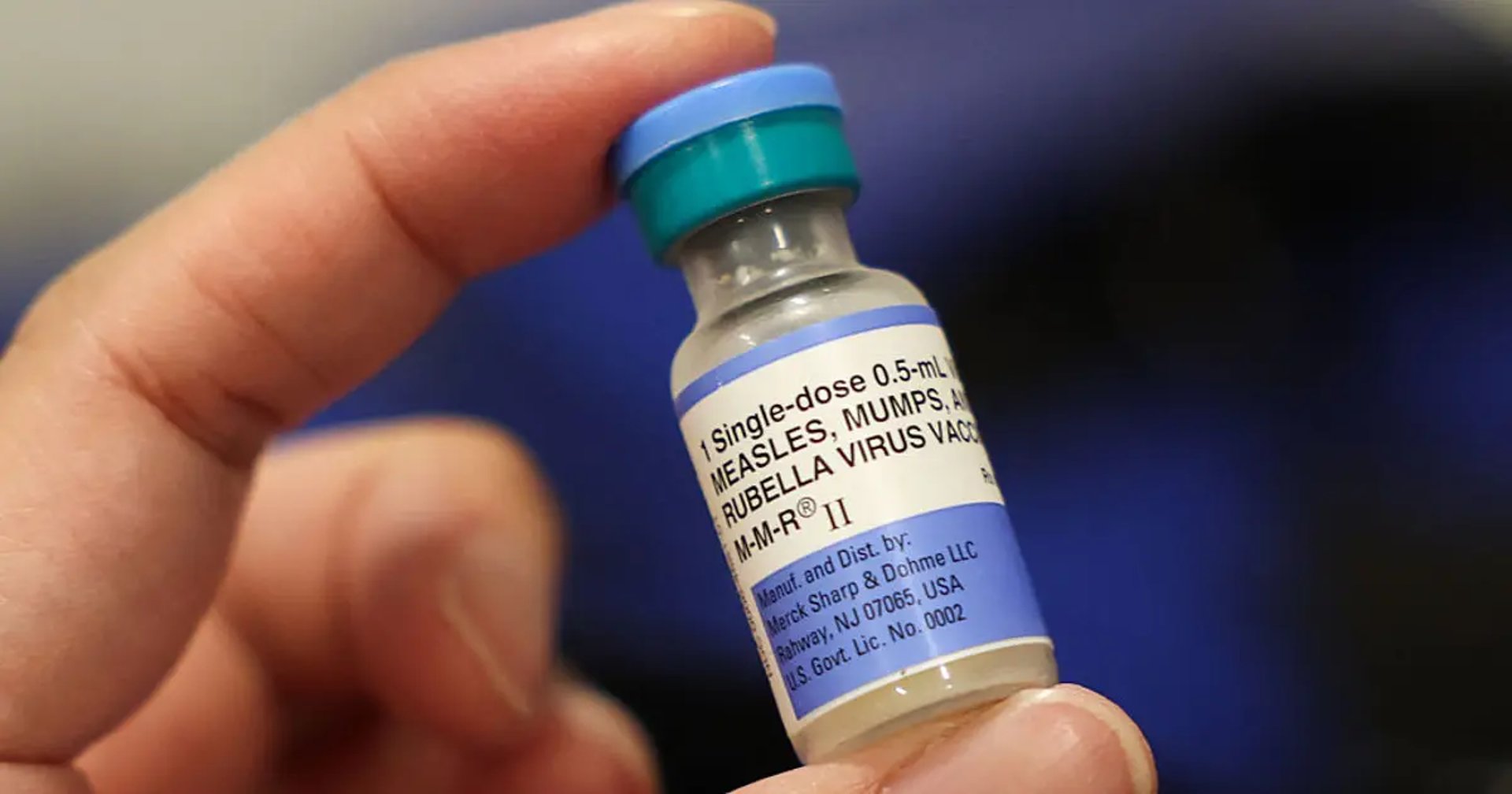 File photo via Brief News
Measles had been considered eliminated as a continually transmitting illness in the United States since 2000 — but not anymore. An independent commission of experts reporting to the Pan American Health Organization has determined that the country no longer qualifies for the status, after the same strain of the virus circulated from person to person for more than a year.
The Wall Street Journal first reported the decision on Friday, November 13. CNN confirmed it through a source close to the process, and KFF Health News confirmed it on Saturday through researchers with knowledge of the decision. The Pan American Health Organization, the World Health Organization's regional arm for the Americas, has not yet made a formal public announcement; one is expected on Tuesday, November 17.
The international committee that determines measles elimination status considers an infection endemic — regularly occurring — if infections caused by the same strain are passed from person to person for at least a year within the same country. To make that call, the experts study the genetic code of viruses sampled from patients.
Evidence presented to the panel included a preprint study published in August by scientists with Utah's public health laboratory, showing that the same strain of measles had been circulating in the state for more than a year, accounting for more than 95% of cases there. The strain traveled from the southwest part of the state to central Utah, causing more than 600 cases between June 2025 and June 2026. Sustained outbreaks have also been reported in South Carolina, Pennsylvania, Wisconsin and New York.
The U.S. Centers for Disease Control and Prevention reported 5,412 confirmed measles cases in 2026 as of November 12 — more than double the 2,289 cases recorded in all of 2025, and the highest annual total since 1991. Forty-three new outbreaks were reported this year, and 96% of this year's cases are linked to outbreaks. Nearly all of the cases have been in people who had not received the measles, mumps and rubella (MMR) vaccine or whose vaccination status is unknown. About one in nine reported cases has required hospitalization, according to the CDC, and at least 10 people have died after catching measles, according to state reports — seven in Pennsylvania, two in Wisconsin and one in New York. The CDC has confirmed six measles-related deaths on its website.
"Measles elimination is a vital sign for our public health system. It shows cracks in our foundation. Losing elimination status means that we are less prepared as a nation to address infectious and noninfectious disease challenges," said Dr. Demetre Daskalakis, former director of the National Center for Immunization and Respiratory Diseases at the CDC.
The loss of the designation carries no formal sanctions and changes no rule or travel measure by itself, but public health experts called it a humbling marker for a country that played a leading role in wiping out smallpox and worked for decades to drive measles offshore. "Basically, measles is back," said Dr. Peter Hotez, co-director of the Center for Vaccine Development at Texas Children's Hospital in Houston.
Measles is one of the most contagious viruses known to science. A single infected person typically spreads it to 12 to 18 others, and the virus is airborne, able to float in a room for hours after a sick person leaves. Two doses of the MMR vaccine cut an exposed person's chances of getting sick by 97% compared with someone who is unvaccinated.
The United States can re-establish its measles elimination status once it shows that outbreak transmission has been interrupted for at least 12 months. "That's not easy, particularly in the current environment with diminished public trust in vaccines, the increasing nonmedical exemptions that we're seeing in schools, and declines in measles, mumps and rubella vaccination among our kindergarten students," said Dr. William Moss, a professor and measles expert at the Johns Hopkins Bloomberg School of Public Health. CDC Director Dr. Erica Schwartz said this month that the agency would not fundamentally change its response to outbreaks even if the country lost its elimination status.
Canada lost its own measles elimination status last year after a lengthy outbreak that spanned several provinces, and Mexico, which has had several large outbreaks of its own, is also in danger of losing the designation.
Ohio is part of the national picture. The Ohio Department of Health reported 327 measles cases in 26 counties so far this year, according to its dashboard updated November 12, with 17 new cases in the past week. Mahoning County, in the Youngstown area, joined the list this week with its first case, and Ashtabula County reported the most new cases, with six. The vast majority of Ohio's cases are among unvaccinated people, the department says.
Sources: CNN, "After 26 years, the US has lost its measles elimination status" (Nov. 13, 2026, full text verified); KFF Health News via CBS News partner News 9, "The U.S. has lost measles elimination status. Here's what that means and who is most at risk" (Nov. 15, 2026); Reuters, "US CDC confirms six measles-related deaths in 2026" (Nov. 12, 2026); The Columbus Dispatch, "Measles spreads again in Ohio as US may soon lose elimination status" (Nov. 13, 2026). The Pan American Health Organization has not yet formally announced the decision; the finding has been reported by The Wall Street Journal, CNN, The Washington Post, Axios and KFF Health News, with a formal announcement expected November 17.
Sponsored