
Voters head to the polls in a sour economic mood, even as jobs and growth hold up
 Editorial illustration
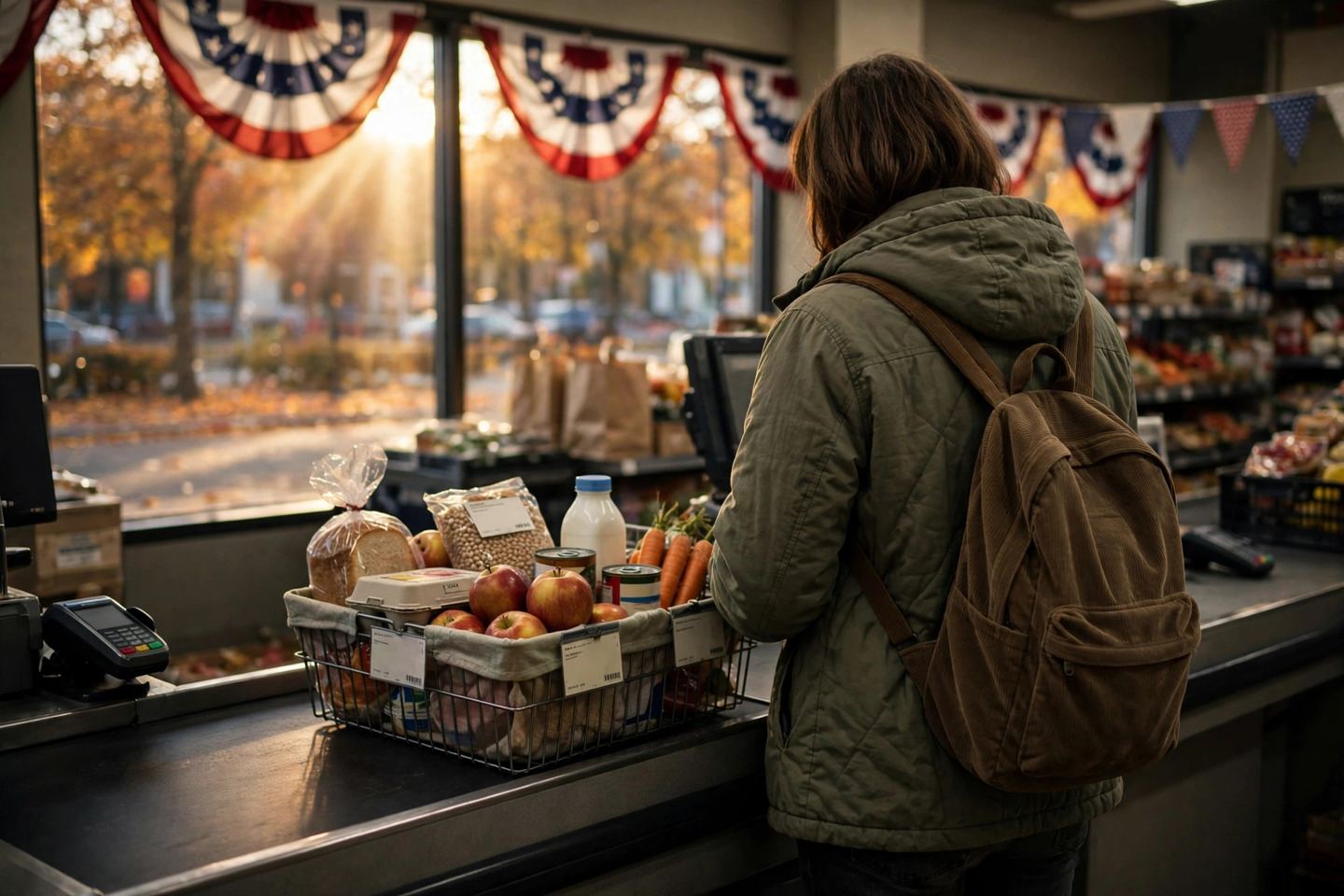
On the eve of elections that will decide whether President Donald Trump's Republican Party keeps control of Congress, voters' minds are on the economy — and the mood is sour. High and rising prices are a key issue, and many voters blame the president's policies, specifically tariffs and the Iran war, for nagging inflation.
The numbers, however, tell a more complex story. On the upside, the unemployment rate remains historically low, more people than ever are employed, overall economic growth is solid, and the artificial-intelligence investment boom has — until recently — been driving up the stock market, padding retirement accounts for millions.
Countering that momentum is inflation. Though not nearly as high as just a few years ago, it is elevated and ever-present enough that people feel the pinch whenever they fill their gas tanks, pay a utility bill or order a meal. Trump is not on the ballot on Tuesday, November 3, but voters have his economic record in mind as they head to the polls — and the vibe is skeptical, if not downright grumpy.
Consumer surveys show the mood has generally deteriorated since Trump's second term began in January 2025, though there are nuances: one widely tracked measure of confidence published by the Conference Board perked up in October, while the University of Michigan's consumer sentiment index registered a near-record low. Brian Jacobsen, chief economic strategist at Annex Wealth Management, said the confidence index tracks the macroeconomy, while the sentiment index is "more personal," asking people how they are doing financially and how affordable they find their lives to be. "Sentiment is the bigger driver of election outcomes, but confidence is the bigger driver of markets," he said.
One argument for macroeconomic confidence derives from the labor market. Firms may not be hiring much, and new graduates are having a hard time finding jobs, but companies are not conducting mass layoffs either. Weekly unemployment insurance claims are near a 57-year low. The unemployment rate, at 4.2% in September, has measured no higher than 4.5% for five straight years — the longest stretch on record.
There is also the updraft from stock market gains to consider. The main U.S. equity indexes have notched dozens of record highs this year, as Trump frequently reminds attendees at his rallies. Most Americans hold some stock, though higher-income households have disproportionately more. Outlays by higher-income households, buoyed by the rising value of their stock holdings, have helped underpin consumer spending, which has been a strong driver of economic growth. Data last week showed the U.S. economy grew at a 3.4% annualized pace last quarter, its strongest performance this year, and business investment rose at an annualized 12.7% pace.
"Consumer surveys can be a little gloomy, but the consumer behavior is quite strong," Treasury Secretary Scott Bessent told CNBC last week. "Corporate behavior is actually quite strong, and I think with tax policy, trade policy, energy policy and the regulatory policy, we've got a very good mix."
Still, some economists warn of potential fragility — and cracks may be starting to appear. As the midterm elections neared, a wave of corporate earnings results from the likes of Amazon.com and Intel added to growing worries about the sustainability of the AI spending boom, sending indexes such as the Nasdaq Composite sharply lower.
"A sharp reset in AI expectations could undermine corporate confidence, trigger a pullback in capex and weigh on GDP growth, just as higher oil prices, tariffs and tighter immigration restrictions push inflation higher, raising the risk of a stagflationary environment in which growth slows even as price pressures persist," Torsten Slok, chief economist at Apollo Global Management, wrote in a mid-October note.
Putting such a dire scenario aside, any economist or Federal Reserve official will acknowledge that frustration with inflation is top of mind for many households. Although it has slowed since its 2022 peak, inflation remains well above the 2% target the central bank equates with its price-stability mandate. The independent inflation data back up the frustration: the consumer price index rose 3.7% in September compared with a year ago, the Labor Department reported, up from 3.4% in August, with core prices up 2.6%. An Associated Press-NORC poll found just 17% of U.S. adults approve of Trump's handling of the cost of living, and only 26% approve of his handling of the economy overall, a new low.
For much of Trump's second term, wages were growing faster than prices, meaning workers could expect their paychecks to cover as much or more of the same goods and services as before. That situation changed earlier this year after the U.S. and Israel launched attacks on Iran in what has become an eight-month war that has lifted fuel prices globally and contributed to price acceleration more broadly. Demand for AI is also adding to inflation, Fed policymakers and economists say, and wage growth is slowing. Consumer prices and average hourly earnings have both risen about 5.5% since January 2025, data from the U.S. Bureau of Labor Statistics show. The upshot: from a purchasing-power perspective, workers are no worse off, but also no better off, than when Trump came into office in January 2025.
The central bank is expected to increase borrowing costs again in December, delivering what Fed Chairman Kevin Warsh calls "monetary medicine" to bring down inflation without, he says, the need "to throw sand in the gears of the economy and throw people out of work." Longer-term borrowing costs have also risen, adding to the affordability woes voters have cited. The combination of 30-year mortgage rates that have topped 7% and a shortage of housing supply that has driven up home prices has conspired to put home purchases out of reach for many people.
Sources: Reuters, "US voters in a sour economic mood heading into midterm elections" (Nov 2, 2026); The Associated Press, "Inflation worsened last month to 3.7% in sign that prices remain elevated as midterm elections near" (Oct 14, 2026), reporting Labor Department consumer price data and the AP-NORC poll.
Sponsored